Transcription of a talk on revolutionary solidarity at the Anarchist
Bookfair in Ghent, May 10th 2026.
Invitation text :
In light of our comrade who has been held in the Haren maxi-prison
since early November 2025, arrested by cops a few streets away from 3
patrol cars smoldering in the night, we talk about revolutionary
solidarity.
News flash : the comrade will appear before trial on Wednesday May
20th. A call to solidarity has been published here (2). The comrade is
kept in jail with limited contact to the outside, read more here (3).
Presentation by comrades from Kalimero - Solidarity fund for prisoners
of the social war :
When repression knocks at our door, at our comrades’ door, we are often
taken by a wave of emergency. Those situations indeed call for
consistent material support : bringing stuff to the jail, contacting
lawyers, asking for visitation permits, eventually contacting the
family, finding money, or watering their plants. And all of that on top
of sleeping very poorly. This support is necessary and it’s the everyday
life of many people who have an incarcerated loved one.
Sometimes it petrifies us. It can also impact the struggle dynamics on
the outside because we are scared to make it worse for the person inside
and for ourselves. Because we are unprepared — we didn’t have those
discussions beforehand, or because we’ve got stuff laying around we
don’t want nosy pigs to put their hands on.
But it also makes us angry, and we feel like we would do anything to get
our comrade out.
But those reactions can also make solidarity that much more difficult.
For anarchists and rebels to feel in solidarity, it doesn’t help much to
position oneself as a simple victim, nor as a super perfect anarchist
who knows no fear. That would only create unbalanced relations. Either
charity or admiration.
For solidarity to express itself more broadly, others have to recognize
themselves in the actions targeted by repression. Without presuming
whether the accused are innocent or guilty, because those categories
belong to the state and its judicial apparatus. It is easier to start
from our own reasons — like explaining why it speaks to us that police
cars are being attacked. We can then develop a discourse that reminds us
it’s not only about everyone hating the police, but also about the
possibility to attack it.
We prefer to act according to our own temporalities, to be where they
don’t expect us. The state is less afraid of a handful of anarchists,
even were they very determined, than of the diffusion of their ideas and
practices. That’s also why limiting ourselves to a symmetrical, lost
battle with the state doesn’t allow us to enter into dialogue with other
rebels. We enter into a cycle where the state takes revenge on
anarchists. Anarchists respond in a sterile dialogue. We get tired,
prison destroys bodies and minds, we specialize and isolate.
That’s why it’s all the more important to create the conditions to
continue our projects and our struggles with our perspectives, including
the necessary question of solidarity.
Texte de présentation de Kalimero, fond de solidarité avec les prisonnier.es de la guerre sociale :
Quand la répression arrive, on est souvent pris dans un cercle d’urgence
et de soutien matériel. Amener des affaires, demander à voir l’avocat,
les parloirs, prévenir la famille, l’argent, ...nourrir les plantes, et
en plus mal dormir. Tout ce soutien est nécessaire. C’est le quotidien
de plein de gens qui vivent en prison ou qui ont leur proche incarcéré.
Parfois, ça pétrifie. Ça impacte les dynamiques de lutte parce qu’on a
peur : peur de mettre la personne qui est déjà dans la merde encore plus
dans la merde, peur pour soi. Mais aussi parce qu’on est mal préparés.
Parce qu’on n’en a pas discuté ensemble, parce qu’il y a des trucs qu’on
ne veut pas donner à ces mains curieux...
On a la rage. Ça nous fout vraiment la rage. Ça donne envie de tout
faire pour que notre pote sorte.
Ce soutien peut aussi empêcher certaines formes de solidarités. Car pour
que les anarchistes et les révoltés se sentent solidaires, il ne sert à
rien de se placer uniquement dans une position de victime, ni à
l’inverse en super-anarchiste sans faille et sans peur. Ça ne créerait
que des relations déséquilibrées. Soit une forme de charité, soit une
forme d’admiration.
Pour que la solidarité puisse vivre plus largement, d’autres que les
anarchistes doivent se reconnaître dans l’acte dont le compagnon est
accusé. Sans présumer si la personne accusée est innocente ou coupable,
car ces catégories appartiennent au pouvoir. Il est plus facile
d’exprimer ces raisons à soi, à l’extérieur de la prison. De dire
pourquoi ça nous parle, par exemple dans le contexte où une voiture de
police est attaquée. On peut alors développer un discours qui permet de
rappeler que non seulement tout le monde déteste la police, mais surtout
qu’on peut l’attaquer.
On préfère agir selon nos propres temporalités, être là où on ne nous
attend pas. L’État a moins peur de quelques anarchistes fussent-ils
déterminés, que de la diffusion de leurs idées et de leurs pratiques.
C’est aussi pour ça que s’enfermer dans un combat perdu d’avance et
symétrique avec l’État ne permet pas de dialoguer avec les autres
révoltés. On entre alors dans un cycle où l’État se venge sur les
anarchistes. Les anarchistes répondent dans un dialogue stérile. On
s’épuise, la prison détruit les corps et les esprits, on se spécialise
et on s’isole.
C’est pour ça qu’il est d’autant plus important de créer les conditions
pour continuer nos projets et nos luttes avec nos perspectives, et
notamment la nécessaire question de la solidarité.
A few words on the discussion that followed, based on personal and
partial notes.
We were around 50 people on a Sunday afternoon in Ghent to gather
around this question. Some were new to anarchist ideas, some were
familiar with them, but all were present with a genuine interest in the
question at hand. The presentation on solidarity gave way to a - at
first hesitant, and in the end rich - discussion on solidarity and what
that could mean to us. A letter from the imprisoned comrade was read.
We talked about the possibility to connect with other rebels on the
subject of anger towards the police. We talked about what solidarity
could mean with people we don’t know directly, beyond giving money.
Solidarity as a breach of isolation to bring out words of rebellion that
exist inside and are often suffocated there. Solidarity as a way of
keeping ideas and practices someone is accused of alive and spreading.
Solidarity as a way of not only spreading our comrades’ ideas but as an
opportunity to reflect on one’s own ideas, one’s own way of thinking
about the world we live in, as a way to recognise oneself in the acts
someone is accused of. The beautiful solidarity as a way of feeling
responsible for the act someone else is accused of, to not let them
exist in isolation.
Someone remembered the struggle that had existed more than 10 years
ago to oppose the building of the prison in Haren the comrade is now
imprisoned in, and more specifically the ZAD (zone à défendre) on the -
then still green land and soon to be gray building site and now prison.
This experience was linked with new plans for more prisons and detention
centers in Flanders and Wallonia, the ever increasing overpopulation in
each prison and the ever found « solution » of building more prisons
instead of liberating people. Someone remembered the question of how the
construction of the Haren prison outside of Brussels was linked to the
open air prison which is the city of Brussels.
We talked about the necessity to bring out flyers to the streets and
talk about our rage for this world and its oppression with others who
are angry aswell and might be more sensitive to our words. We talked
about the shifts in what people find acceptable as means of struggle, of
the necessity to talk about the roles of judgement, prisons,
institutions in our lives.
Organisations in support of or in solidarity with prisoners were
mentioned : Getting the voice out (who gets out voices of prisoners in
detention centers), the anti-repression fund Marius Jacob, the « FAC »
(Fond anticarcéral, against prisons and detention centers). All 3 in
Belgium. Kalimero Paris (solidarity fund for prisoners of the social
war), La Rache in Lille. A solidarity fund and an open anarchist
assembly with prisoners, to share struggles of anarchist prisoners, in
Greece.
We talked about the wish to overcome distinctions between
« political » and « social » prisoners, about the continuity of repressive
systems inside and outside of the prison walls, about the difficulty to
maintain long lasting bonds of reciprocal solidarity beyond single topic
campains, often involving raising money or raising awareness over
repressed people linked with struggles elsewhere (Kanaky, Palestine,
Sudan,...). We questioned how those bonds could mutually transform our
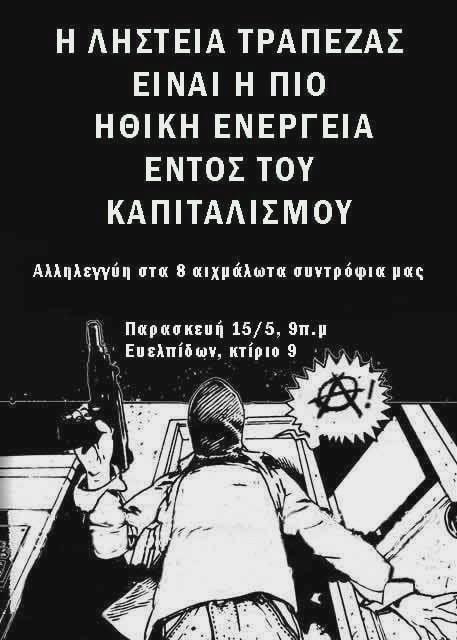
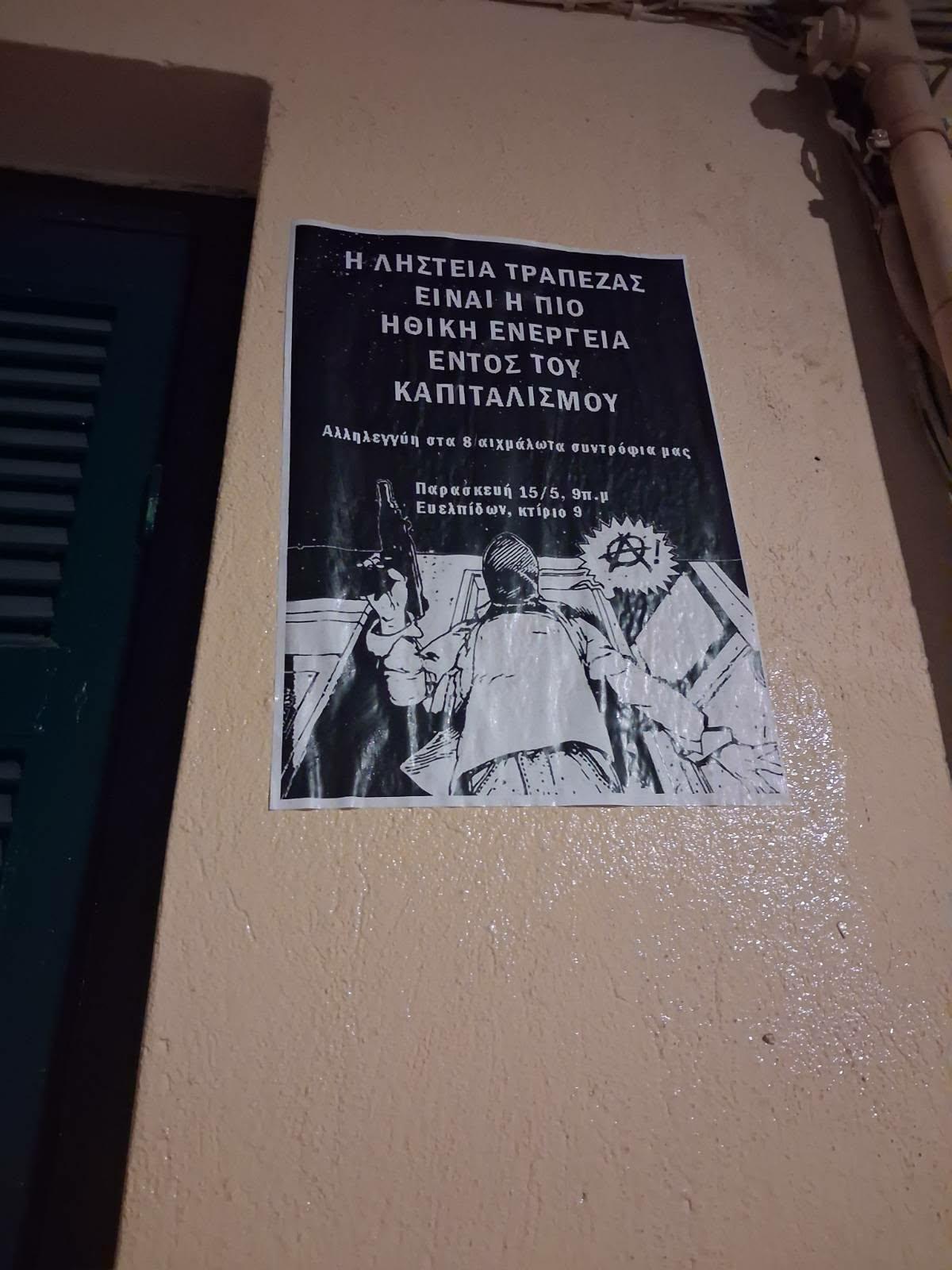
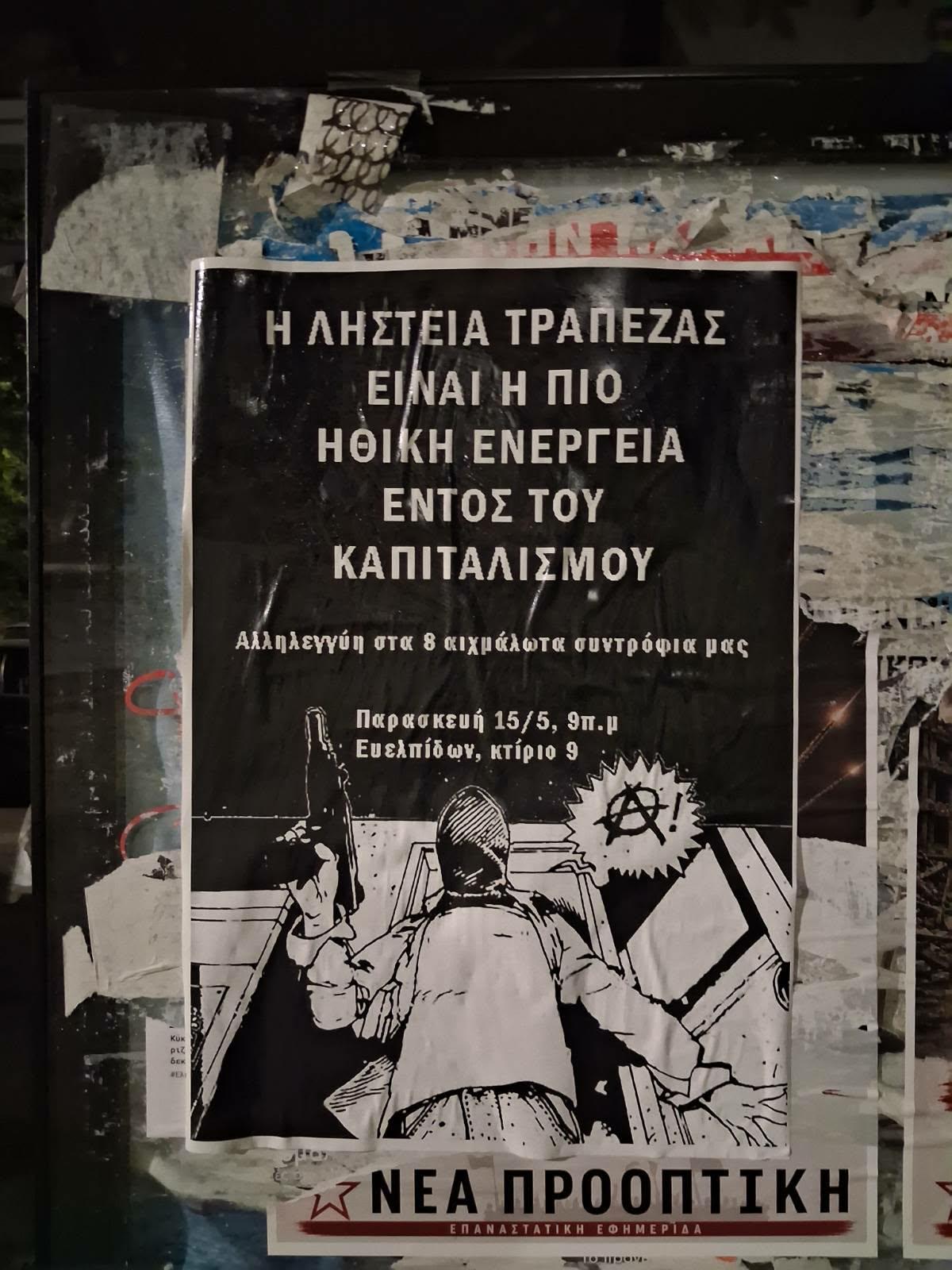
lives. A comrade presented a translation in solidarity with 9 people who
were imprisoned for a wild demo against ICE in Texas, USA, last year and
recently found guilty. We talked about the solidarity in acts and words
against the police whose violence runs through the whole of society and
whose means of killing us are manyfold : with their guns and their cars
and their knees and their bare hands. Violence which can’t be reformed
nor controlled.
* A joke that only those present will understand ;-)





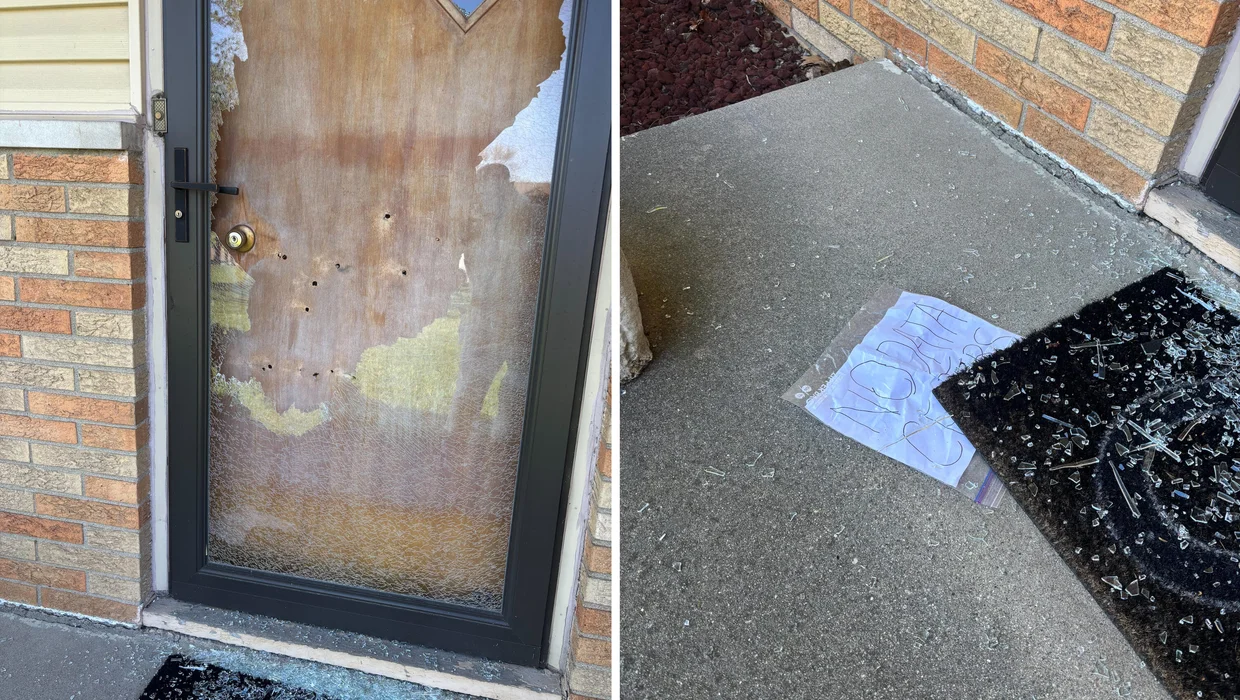 according to the occupation's media, a city politician who supports the building of a metrobloks data center got shots fired at their house in retaliation about a month ago.